
Professional removal and replacement of damaged or salt-contaminated plaster. We use plastering systems selected to suit the property and the remedial treatment completed beneath them.
Local Jobs Completed
Years of Combined Industry Experience
Guarantee
Damp can cause plaster to become soft, hollow, cracked or contaminated with salts. Even after the moisture source has been resolved, damaged material may be unsuitable for normal decoration.
Applying a thin skim over affected plaster can hide the problem temporarily, but salts and weakened material beneath the surface may cause staining, bubbling or further detachment.
Our specialist replastering service removes unsuitable material, correctly prepares the exposed masonry and reinstates the wall using a system appropriate for the building and the remedial treatment.
Choose a convenient time and we’ll arrange your property survey
We inspect the issue, identify the cause and explain our finding.
You’ll receive a clear report with recommendations and a fixed quote
We carry out the work to the highest standard with a 20 year guarantee.
There is no single plaster specification suitable for every damp-affected property. The correct system depends on the construction, the type of moisture problem and the treatment installed.
Your specification may include one or more of the following.

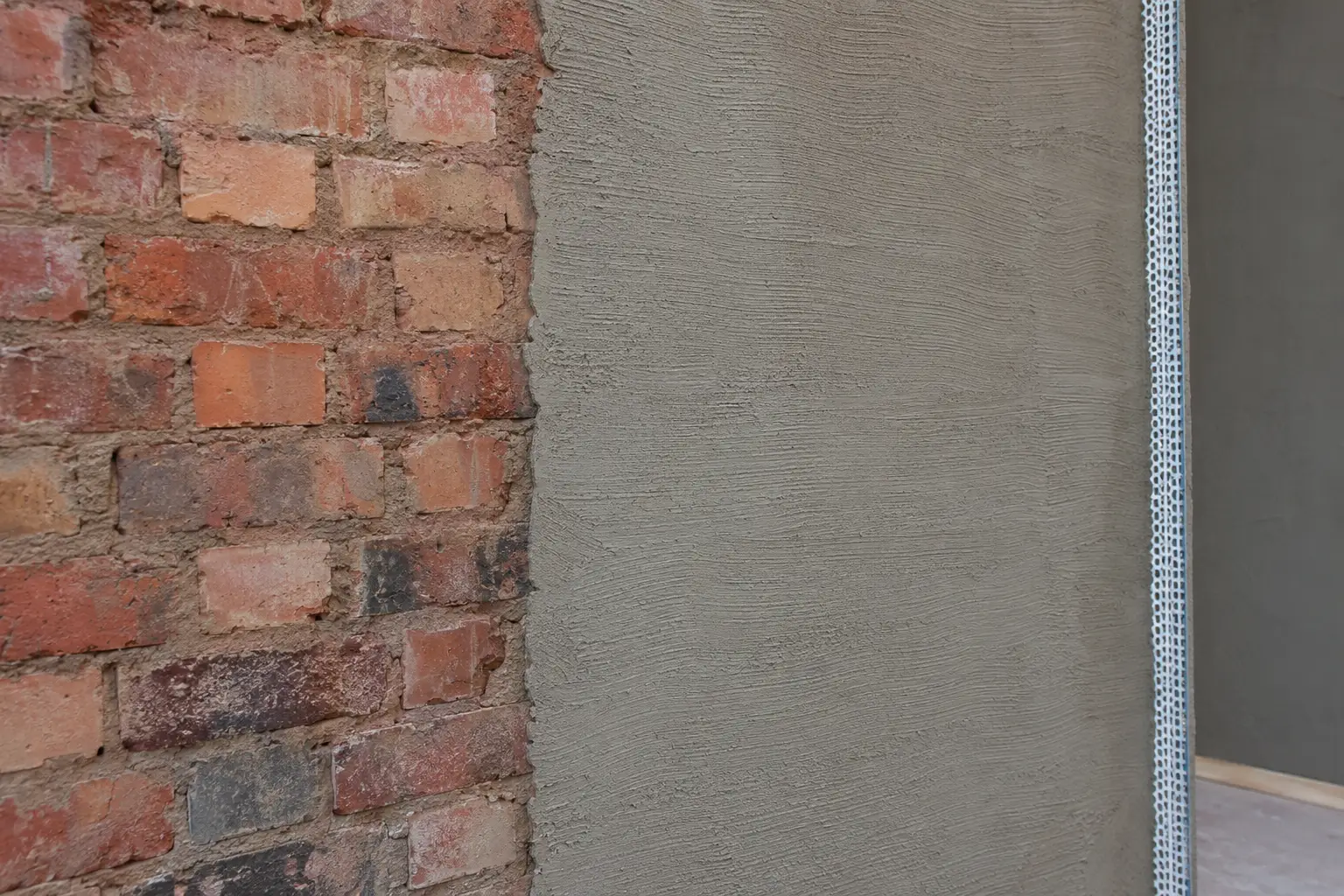
A dense specialist backing render can help prevent residual salts within the masonry from disrupting the finished surface.

Lightweight renovating plasters can offer improved salt resistance and different moisture-handling characteristics compared with standard gypsum products.
Where specified as part of a waterproofing system, a membrane can separate the internal wall finish from the masonry behind it.

Mesh or other reinforcement may be used at vulnerable junctions or changes in background to reduce the risk of movement-related cracking.

Once the backing system is ready, a compatible finish coat is applied to produce a smooth surface suitable for decoration.

Older and traditionally constructed properties may require a different approach. Materials should be selected according to the wall construction rather than assuming one system suits every building.

Not every damp-affected wall needs to be stripped completely. Some plaster may remain sound, while other areas may have lost their bond or become heavily salt-contaminated.
During the assessment, we consider:
Specialist replastering is commonly required after:
Salt-contaminated lower-wall plaster may need to be removed and replaced after a damp-proofing system has been installed.
Plaster damaged by water entering through defective walls, gutters, roofs or external finishes may require reinstatement once the defect is repaired.
Basement waterproofing systems require carefully specified internal finishes that remain compatible with the treatment beneath them.
Opening-up work may disturb plaster while fungal decay and affected structural timbers are investigated and repaired.
Accessing concealed structural timber can require localised removal and subsequent reinstatement of internal finishes.
Once the leak has been repaired and the structure has dried sufficiently, damaged internal plaster can be replaced.