
Professional diagnosis and practical solutions for recurring condensation, excessive indoor humidity and mould growth. We identify why moisture is collecting and recommend the right combination of ventilation, heating and moisture control.
Local Jobs Completed
Years of Combined Industry Experience
Guarantee
Condensation forms when warm, moisture-laden air meets a colder surface. It is commonly seen on windows, external walls, ceilings and behind furniture where air cannot circulate properly.
Although occasional condensation is normal, persistent moisture can encourage mould growth, damage decorations and make rooms feel cold and uncomfortable.
Our surveys look beyond the visible symptoms. We assess humidity, ventilation, heating, cold surfaces and how moisture is being produced and removed from the property.
Choose a convenient time and we’ll arrange your property survey
We inspect the issue, identify the cause and explain our finding.
You’ll receive a clear report with recommendations and a fixed quote
We carry out the work to the highest standard with a 20 year guarantee.

Cooking, showering, drying clothes and even breathing release moisture into the air. Problems develop when moisture is produced faster than it can leave the property.

Blocked airbricks, closed trickle vents, ineffective extractor fans and limited background ventilation can allow humid air to remain trapped indoors

External walls, window reveals and uninsulated areas can be considerably colder than the surrounding air. Moisture condenses on these surfaces first.

Allowing rooms to become very cold and then heating them for short periods can increase the likelihood of surface condensation.
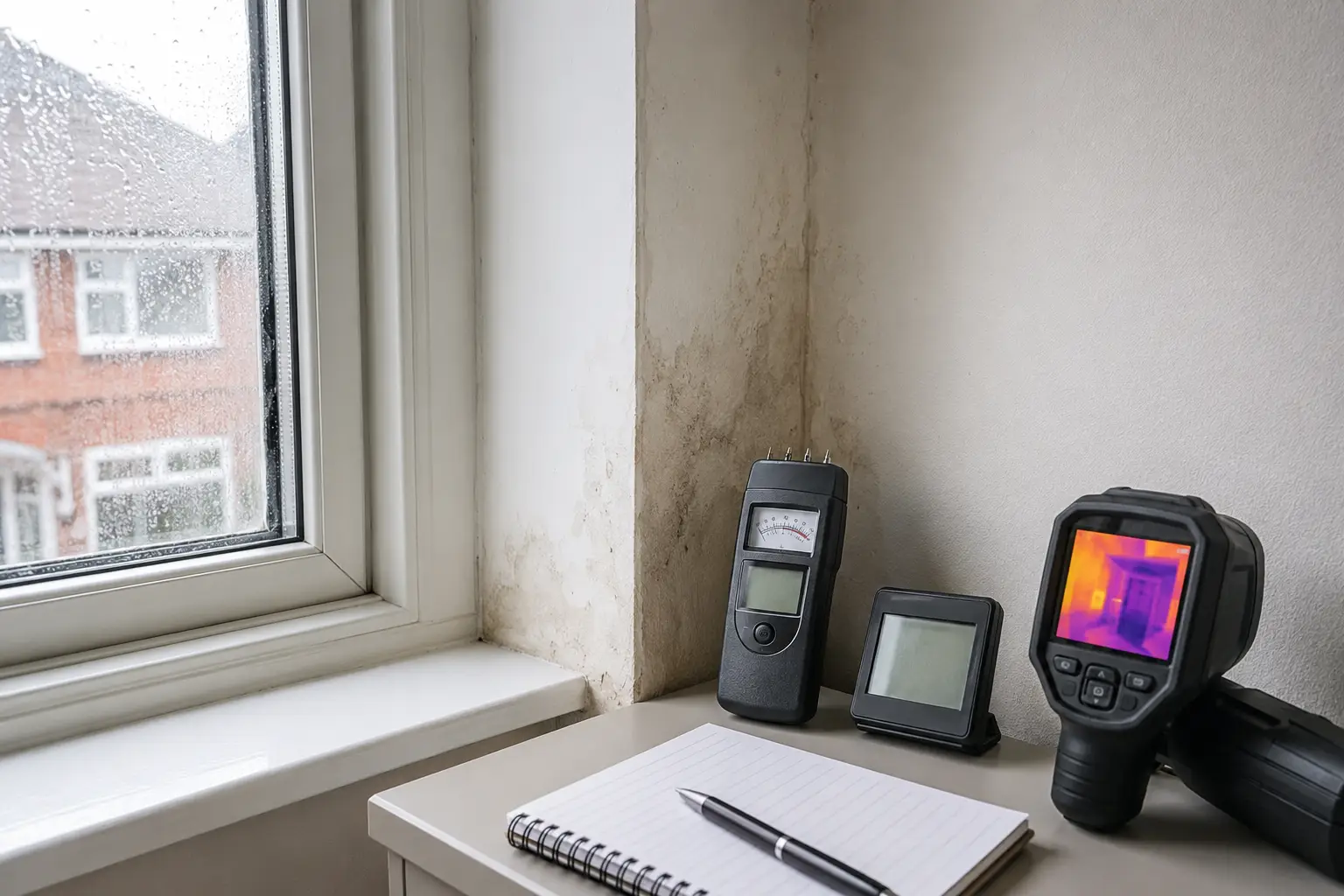
Large furniture placed tightly against external walls can create cold pockets where air cannot circulate and mould can develop unnoticed.

Condensation, penetrating damp and rising damp can sometimes produce similar symptoms, but they require different solutions.
Condensation typically affects colder surfaces and is often worse during autumn and winter. Penetrating damp is associated with water entering through a building defect, while rising damp normally affects the lower section of ground-floor walls.
Before recommending treatment, we consider:
There is rarely one universal solution. The correct approach depends on the property, the number of occupants, the way rooms are used and the existing ventilation and heating arrangements.
Your recommendations may include a combination of the following.
Effective bathroom and kitchen extraction removes moisture close to where it is produced, before it can spread throughout the property.
Trickle vents, air vents and other suitable ventilation measures can provide controlled airflow without relying entirely on occupants opening windows.
Where suitable, a positive input ventilation system can introduce filtered air and help dilute moisture-laden indoor air throughout the property.
Increasing the space behind furniture and keeping ventilation routes clear can reduce cold, stagnant areas where mould commonly develops.
More consistent background heating and practical changes to everyday moisture production can help reduce the risk of condensation.
Existing mould can be professionally treated once the underlying moisture and ventilation issues have been addressed.