
Professional diagnosis, treatment and timber repair for fungal decay. We identify the moisture source, establish how far the damage has spread and recommend the work genuinely needed to protect your property.
Local Jobs Completed
Years of Combined Industry Experience
Guarantee
Dry rot and wet rot are both forms of fungal timber decay. Although they behave differently, both develop because timber has been exposed to excessive moisture.
Effective treatment therefore involves more than removing visibly damaged wood. The source of moisture must be identified and resolved, the full extent of the decay established and weakened timber repaired or replaced where necessary.
Our surveys assess accessible structural timbers, nearby masonry, ventilation and likely moisture sources before any treatment is recommended.
Choose a convenient time and we’ll arrange your property survey
We inspect the issue, identify the cause and explain our finding.
You’ll receive a clear report with recommendations and a fixed quote
We carry out the work to the highest standard with a 20 year guarantee.
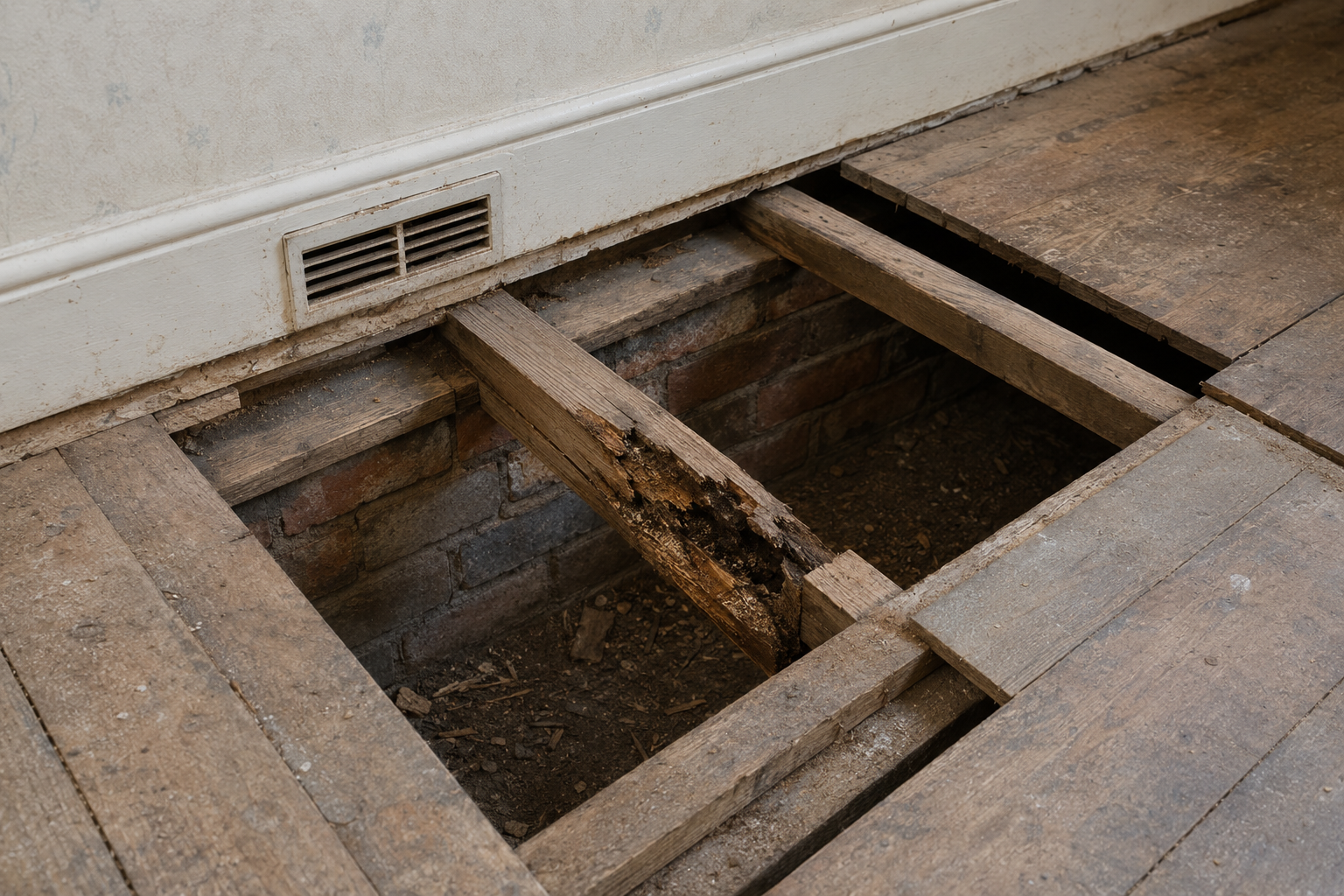
Dry rot is a destructive form of fungal decay that can severely weaken structural timber. It may spread beyond the immediate moisture source, travelling across adjacent materials in search of further timber.
Typical signs include brittle wood, deep cuboidal cracking, pale fungal strands and rusty orange fruiting bodies.
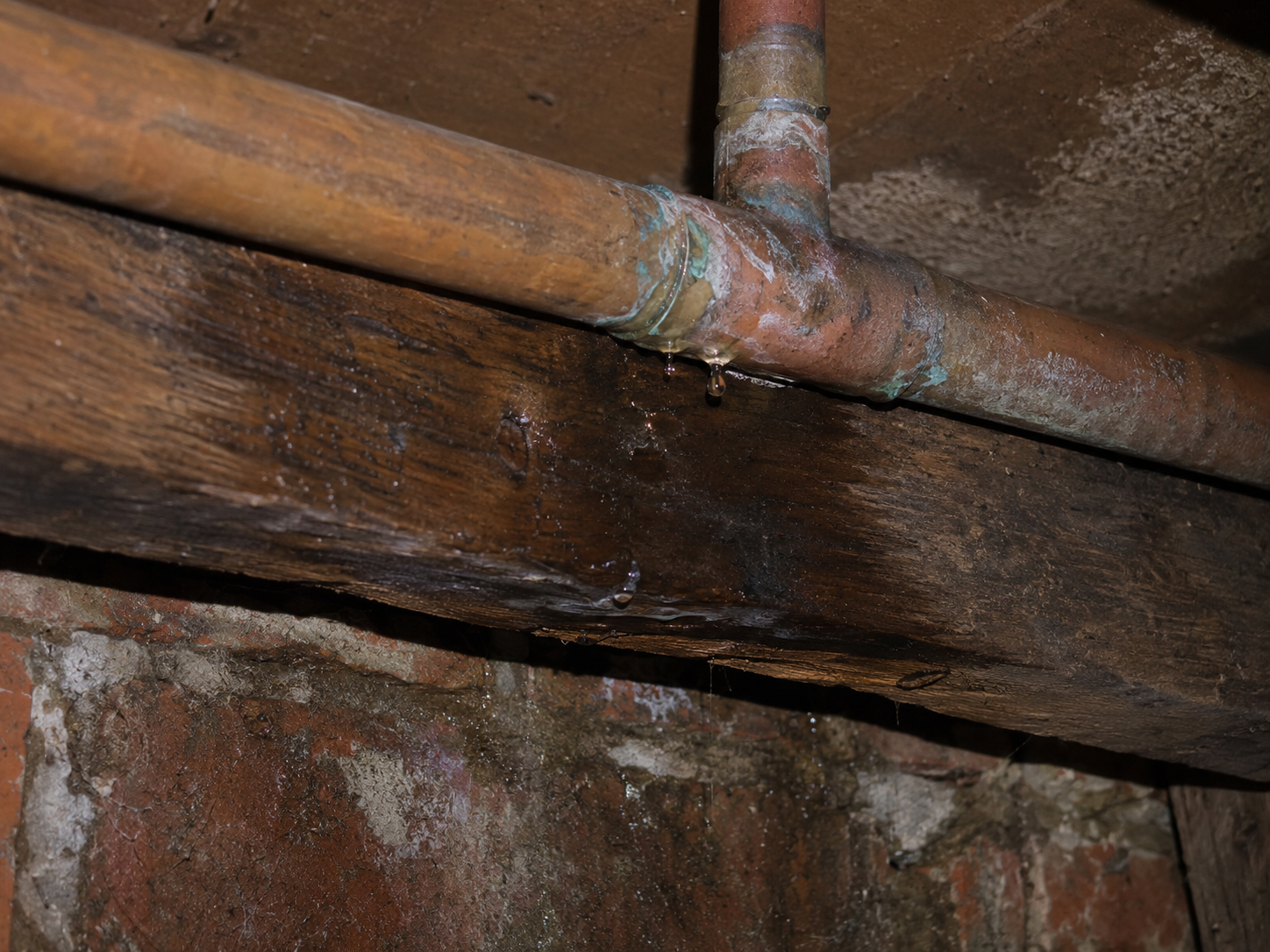
Wet rot normally remains concentrated around an ongoing source of moisture. Affected timber may become dark, soft, fibrous or crumbly and gradually lose its structural strength.
It is commonly found around leaking pipes, poorly ventilated subfloors, defective external walls and persistently damp joist ends.
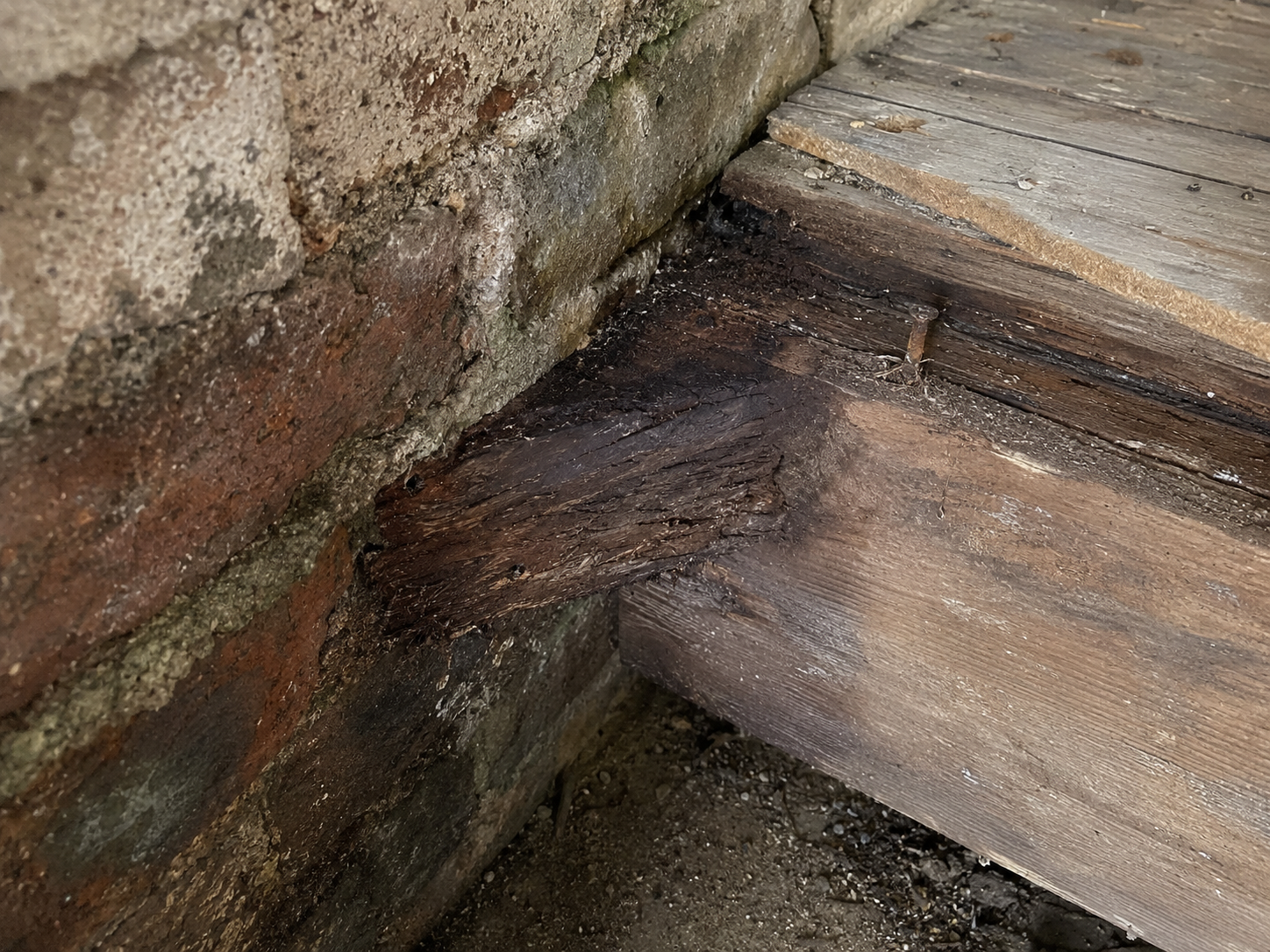
Neither form of decay should be treated without investigating the conditions that allowed it to develop.
Possible causes include:
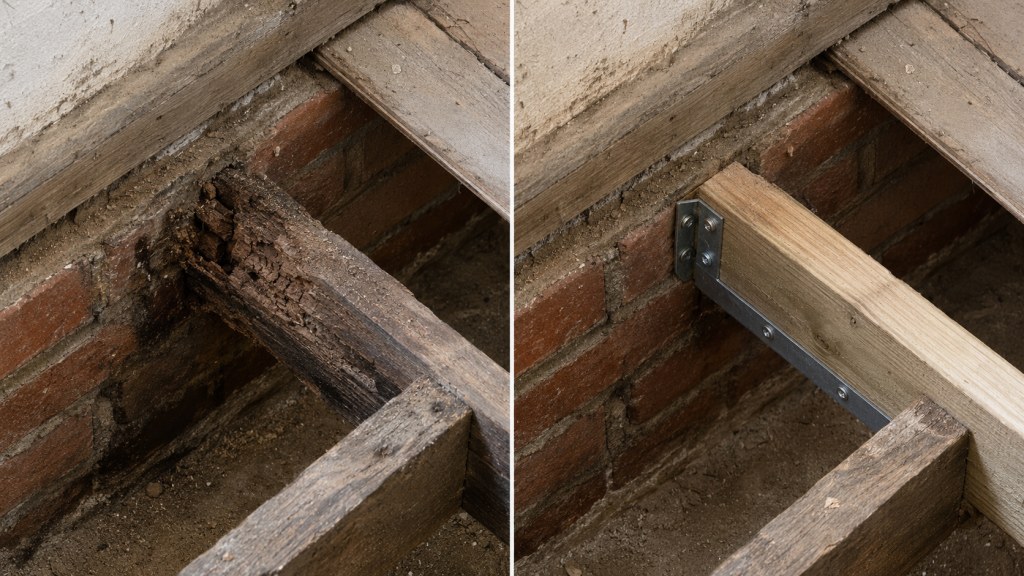
Different types of fungal decay can look similar, particularly during their early stages. Our survey considers the appearance of the timber, moisture readings, fungal growth, ventilation and surrounding building defects.
The correct treatment depends on the type of decay, its extent and the condition of the surrounding timber. Your recommendations may include a combination of the following.
Leaks, penetrating damp, poor ventilation or other building defects must be corrected so the affected area can dry properly.
Severely decayed timber and contaminated finishes may need to be carefully removed to expose sound material and prevent further deterioration.
Severely decayed timber and contaminated finishes may need to be carefully removed to expose sound material and prevent further deterioration.
Where appropriate, retained timber and adjoining risk areas can be treated using professional products selected for the specific conditions.
Affected joists, floorboards or other structural components can be repaired, reinforced or replaced where they no longer provide adequate support.
Improved airflow, particularly beneath suspended timber floors, can help keep timber dry and reduce the risk of future decay.