
Professional diagnosis and effective treatment for rising damp, penetrating damp and moisture-related damage.
Our experienced team will identify the likely source of the problem, explain your options and recommend a solution designed around your property.
Local Jobs Completed
Years of Combined Industry Experience
Guarantee
Damp can affect properties for many different reasons. Rising moisture, external defects, leaking pipes, condensation and high ground levels can all produce similar signs inside your home.
Treating the wall without understanding the source may only hide the problem temporarily. That’s why we begin with a careful inspection of the property before recommending any damp-proofing work.
Once we have assessed the affected areas, we will explain our findings, outline the available options and provide a clear quotation for any recommended treatment.
Choose a convenient time and we’ll arrange your property survey
We inspect the issue, identify the cause and explain our finding.
You’ll receive a clear report with recommendations and a fixed quote
We carry out the work to the highest standard with a 20 year guarantee.
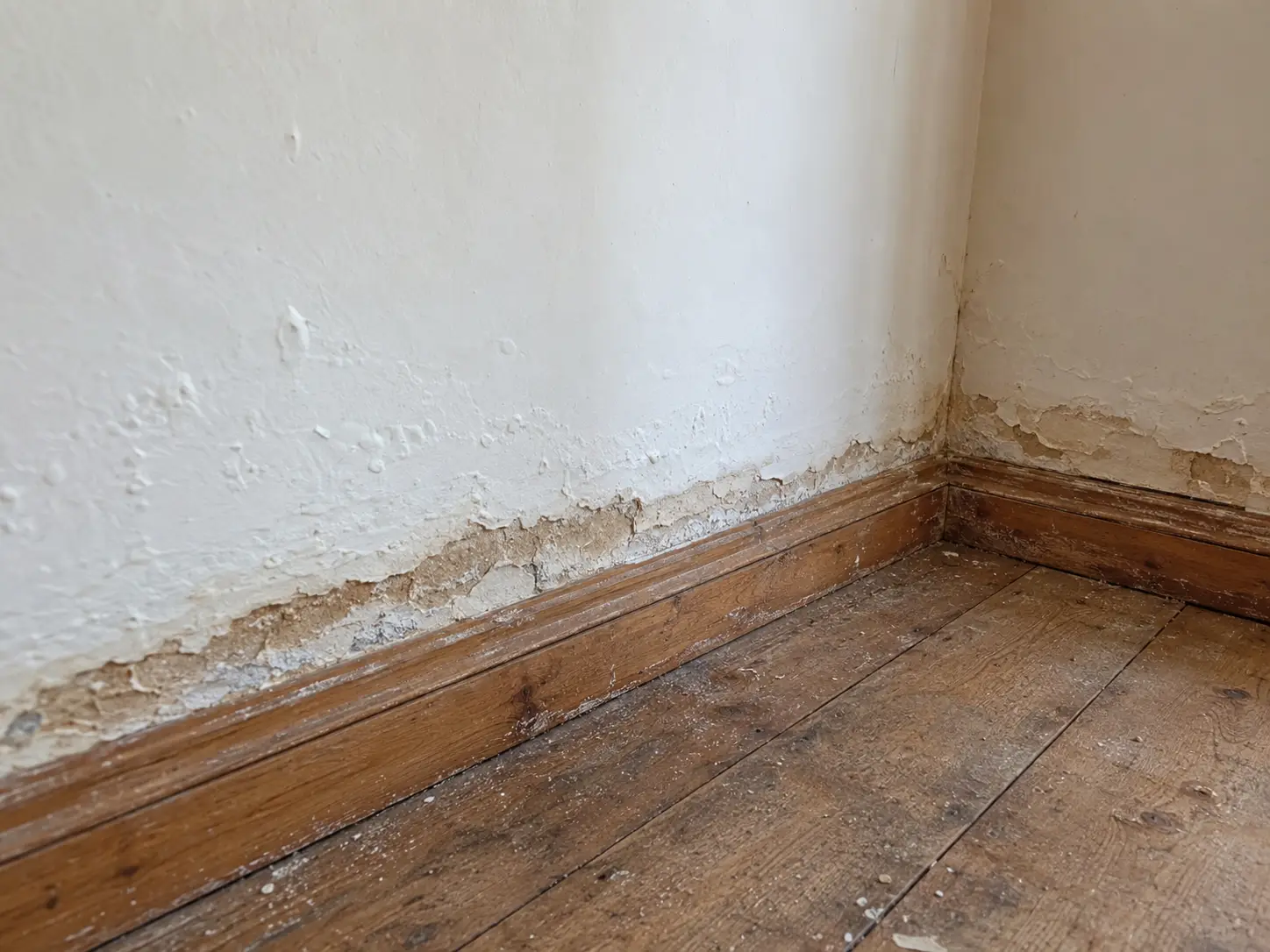
Rising damp occurs when moisture from the ground travels upwards through the walls of a building.
It is commonly associated with a missing, damaged or bridged damp-proof course. Typical signs can include low-level tide marks, salt deposits, damaged plaster and decaying skirting boards.
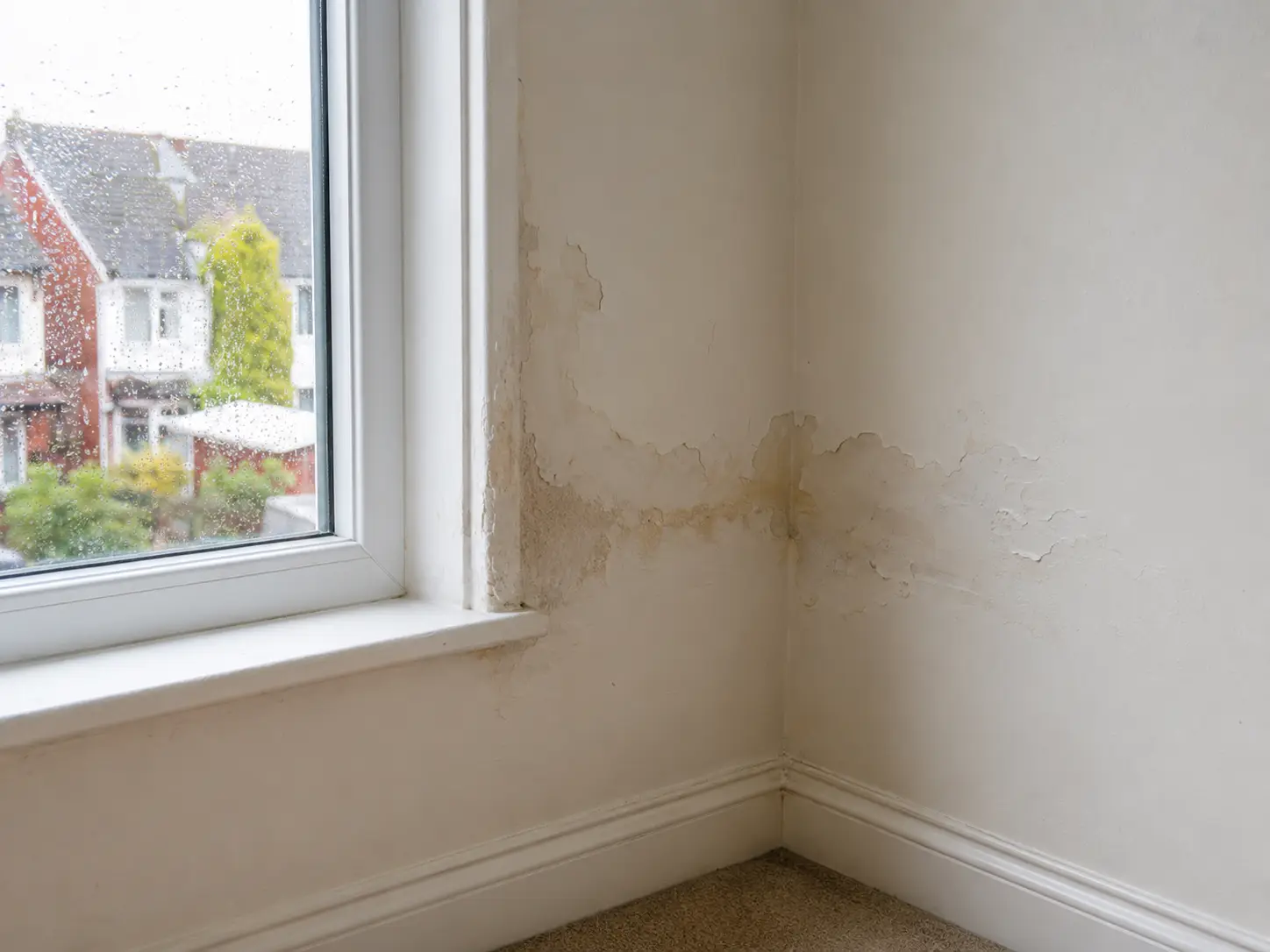
Penetrating damp happens when moisture enters the property through an external defect.
Common causes include cracked render, damaged pointing, leaking gutters, defective roof coverings, poorly sealed windows and faulty pipework. Unlike rising damp, penetrating damp can appear at any height and may worsen following heavy rain.
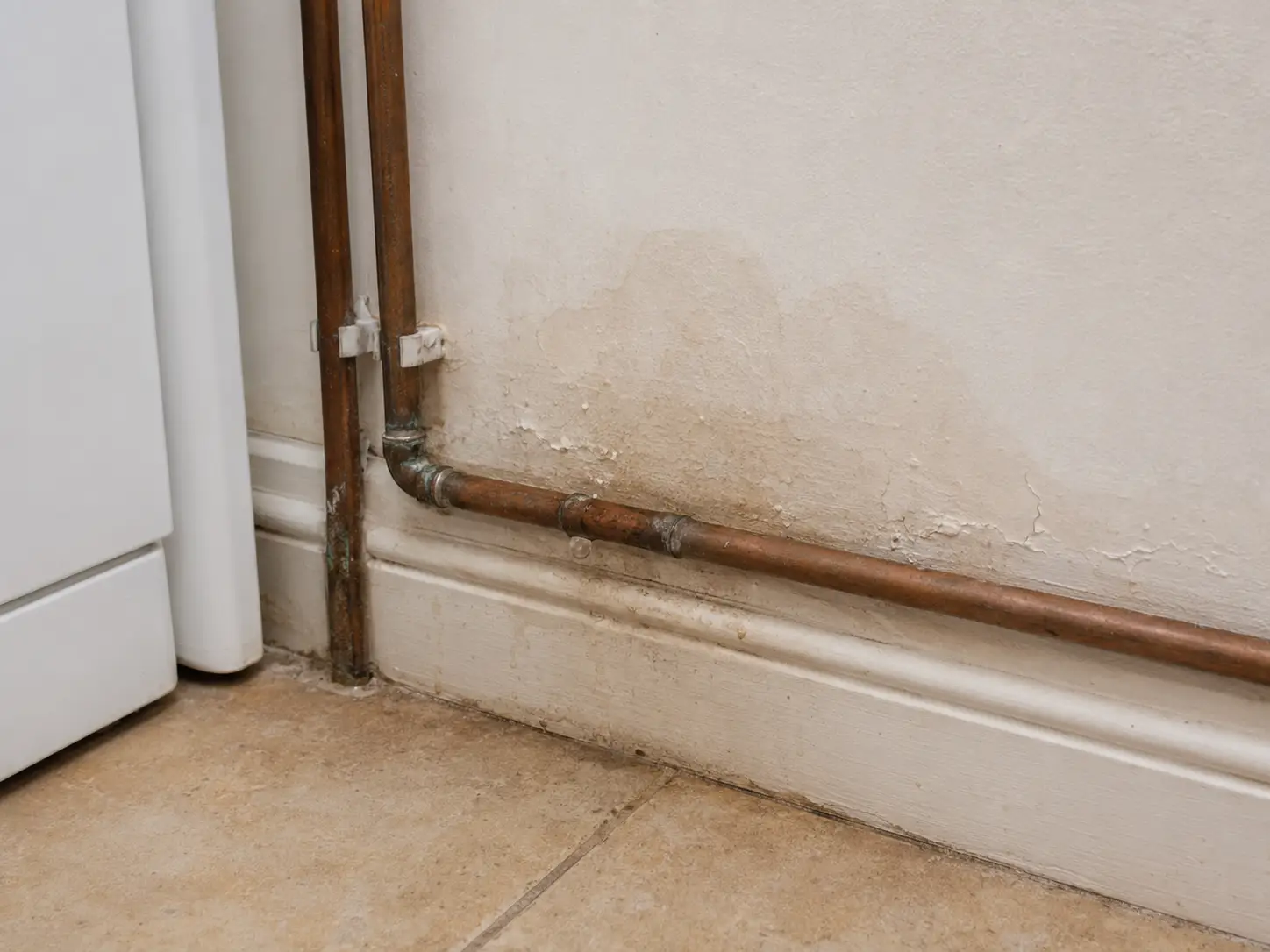
Not every damp patch requires a new damp-proof course.
Condensation, plumbing leaks, blocked drainage, high external ground levels and moisture trapped behind unsuitable materials can all create similar symptoms. Identifying the correct source helps avoid unnecessary or ineffective work.
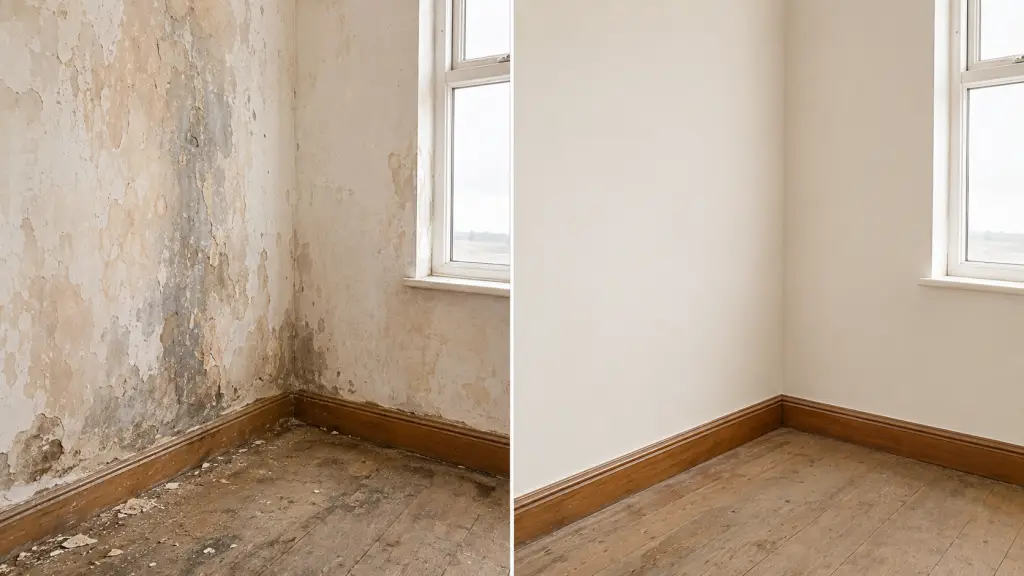
Every property is different. Its age, construction, materials, ventilation and surrounding ground levels can all affect how moisture enters and moves through the building.
We begin with a detailed assessment of the affected areas and any adjoining walls. Where appropriate, we take moisture readings and inspect for visible defects that could be contributing to the problem.
The correct solution will depend on the type of damp, the construction of the property and the condition of the affected materials.
Where rising damp has been correctly diagnosed, a new chemical damp-proof course may be installed to help prevent ground moisture from continuing to rise through the masonry. The installation method and product used will be selected according to the construction and condition of the wall.
Specialist damp-proof membranes can be used to isolate damp or salt-contaminated backgrounds before the wall is refinished. These systems may be recommended where conventional plaster alone would be vulnerable to residual moisture or salts within the masonry.
Penetrating damp frequently requires the original external defect to be repaired before internal finishes are restored. This may include work to damaged pointing, cracked render, defective seals, drainage, gutters or other areas allowing rainwater into the building.
Plaster affected by persistent moisture and hygroscopic salts may need to be removed after the source of the damp has been addressed. We can install an appropriate replastering system designed to work alongside the specified damp-proofing treatment and provide a clean, durable finish.