
Professional inspection and targeted treatment for active wood-boring beetle infestations affecting roof timbers, floor joists, floorboards and other structural wood.
We’ll assess whether the infestation appears active, identify the extent of any damage and recommend the most appropriate treatment.
Local Jobs Completed
Years of Combined Industry Experience
Guarantee
Woodworm is a general term used to describe the larval stage of several species of wood-boring beetle. The larvae live and feed within timber before eventually emerging as adult beetles and leaving visible flight holes behind.
However, the presence of flight holes alone does not confirm current activity. The holes may have been present for many years, and unnecessary treatment should be avoided.
Our survey considers the appearance of the holes, the presence of fresh bore dust, the condition of the timber and the surrounding moisture levels before treatment is recommended.
Choose a convenient time and we’ll arrange your property survey
We inspect the issue, identify the cause and explain our finding.
You’ll receive a clear report with recommendations and a fixed quote
We carry out the work to the highest standard with a 20 year guarantee.
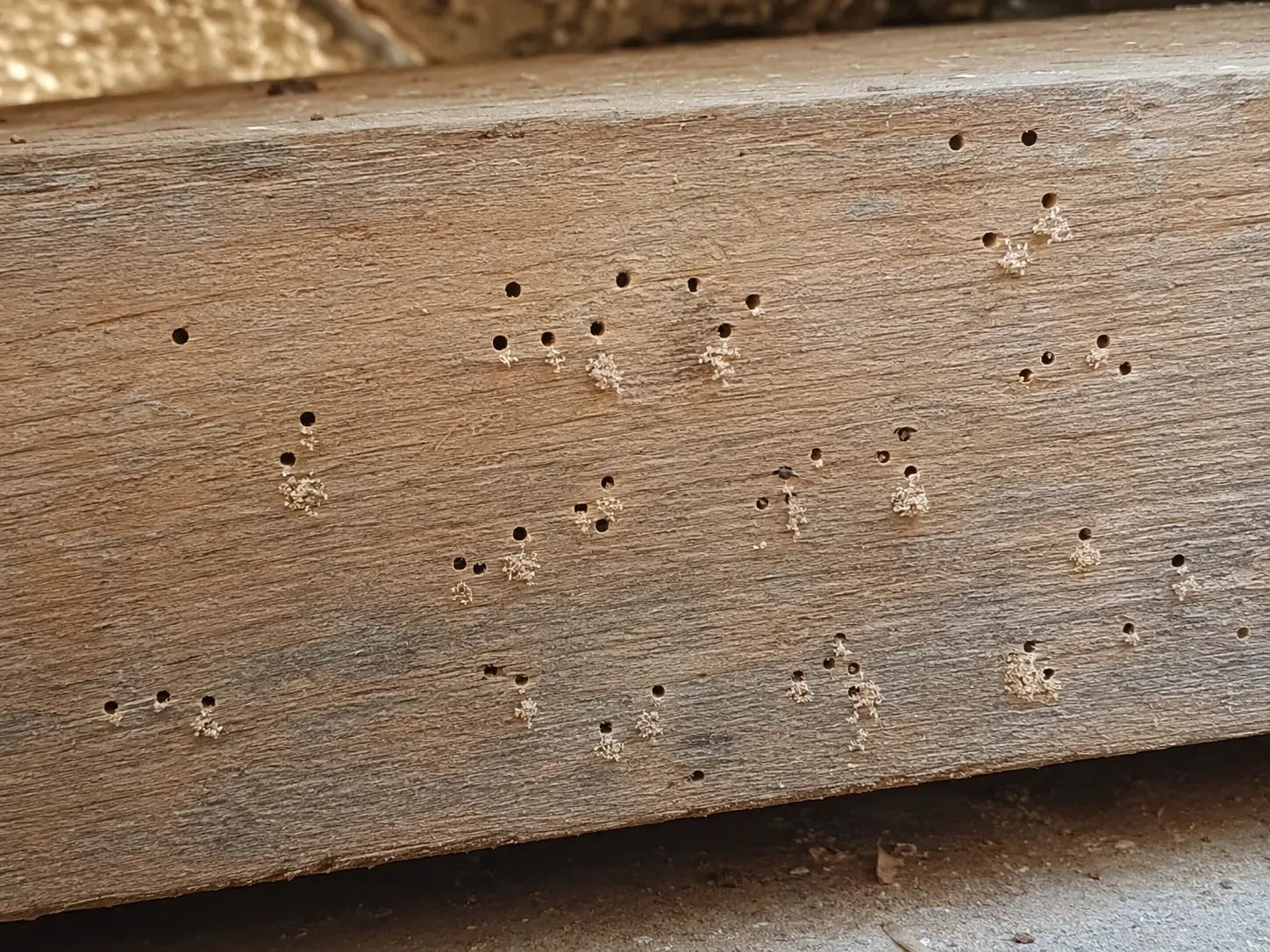
Adult beetles leave holes when they emerge from the timber. The size, shape and condition of these holes can help indicate which type of wood-boring beetle may be present.
Fresh, pale bore dust or frass near the holes may indicate more recent activity, although all available evidence needs to be considered.
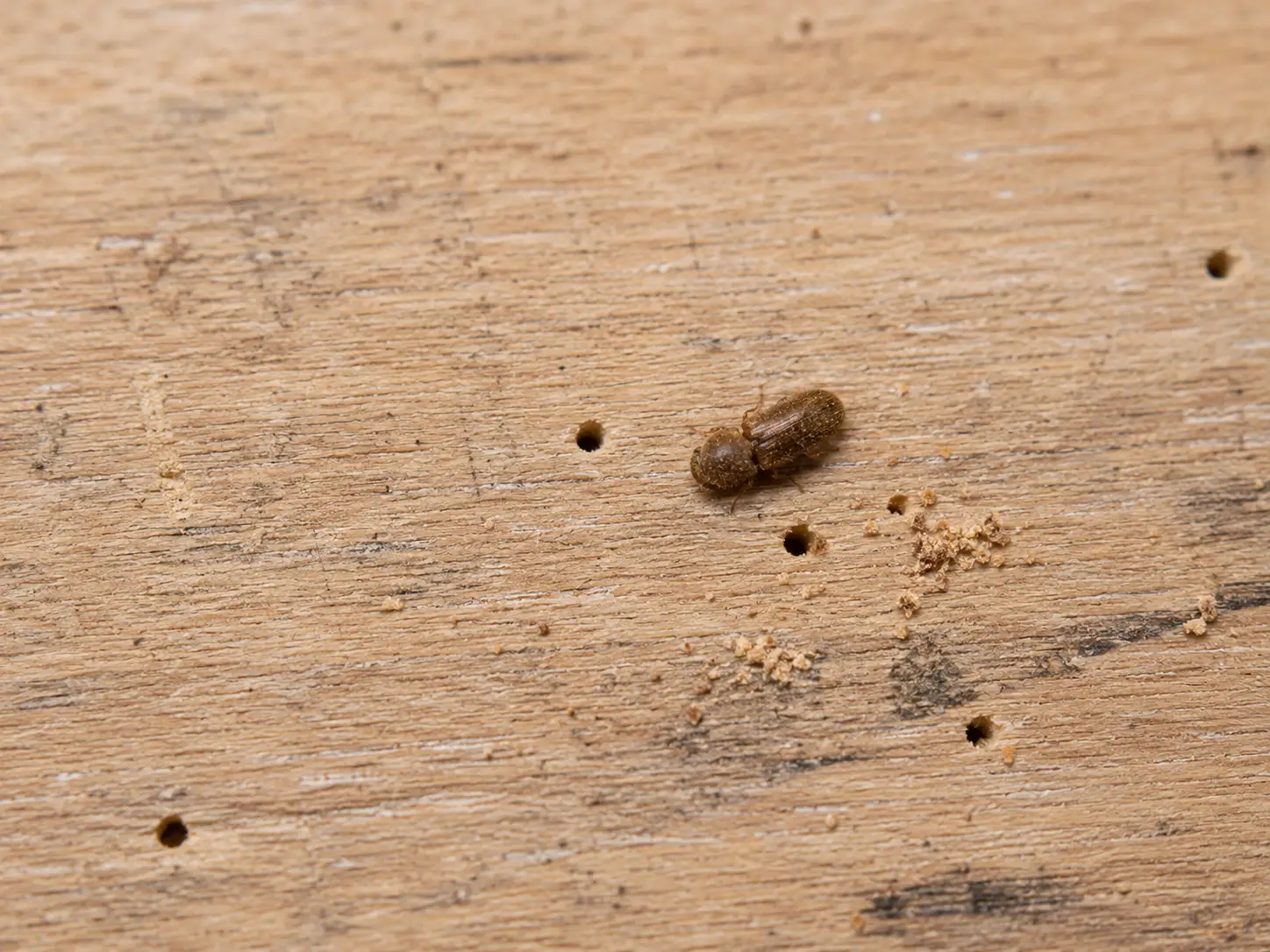
Different wood-boring beetles favour different timber types and conditions. Identifying the likely species helps determine whether treatment is required and which areas may be at risk.
Where adult beetles are found, their appearance and location can provide further evidence.

Some beetles are more likely to affect timber where moisture levels are elevated or ventilation is poor.
We therefore assess the surrounding environment as well as the visible insect damage. Dampness, condensation or timber decay may need to be addressed alongside the infestation.
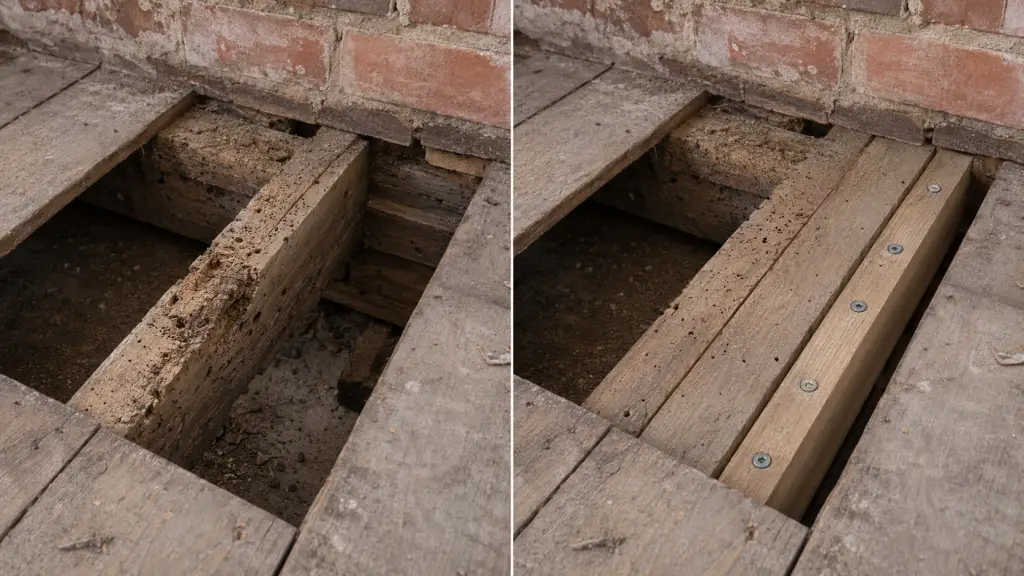
An effective woodworm survey involves more than simply looking for holes. We inspect accessible timbers to determine whether there are signs of recent activity and whether the damage has affected their condition.
Roof voids, suspended floors, staircases, cellars and other concealed areas may all need to be considered depending on where the original evidence was found.
Where an active infestation has been identified, an appropriate professional timber treatment can be applied to accessible affected areas. The treatment method and product will depend on the likely beetle species, timber condition, location and extent of the infestation.
Elevated timber moisture and poor airflow can make some areas more vulnerable to infestation and decay. Where these conditions are present, we may recommend improving ventilation, addressing water ingress or resolving an underlying damp problem.
Timber that has suffered significant structural damage may need to be strengthened or replaced. Where appropriate, damaged joists can be repaired or reinforced while sound sections are retained. Any substantial structural concerns will be clearly identified during the survey.
Old flight holes remain visible after treatment, so they should not automatically be interpreted as evidence that the work has failed. We will provide suitable aftercare information and explain what signs to monitor following treatment.